I know it takes a lot of time and dedication to be a writer. What made you decide to embark on writing your first book? What were you doing at the time, and how did you manage to carve out time for writing? How did you go about getting the book into the hands of a publisher?
What was the most challenging scene in Women of a Promiscuous Nature to writer? Is there one you’re especially proud of?
That was definitely a bit of eye-opening research! I have more stunning graphics I can share, like this one. This is one of the commonplace ads that would get posted somewhere.
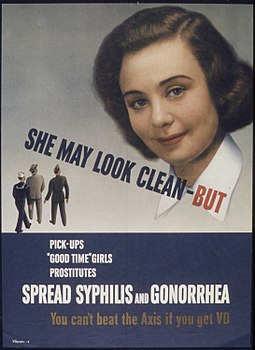
I remember that child law in China. I wonder what happened to child #2? I’m almost afraid to think about it.
I know - and I shared a graphic below with Nan if you want another jaw-dropping experience!
There was so much during my research I found out that was truly stunning - like the actual abuses that went on in these facilities that were supposed to help women. The isolation in “meditation” rooms, beatings, withholding food, etc., and if you can believe it, I held back on including some of the neglect. On the other hand - and what was truly conflicting - is the good that was done. Some were illiterate, and when they were (finally)released, they could read and write. Many women couldn’t afford basic health care or dental work. These issues were addressed. Women were taught a vocation so they could support themselves or help support their families. All in all it boggles the mind when you consider one thing up against the other.
I wasn’t looking to really change up what I wrote about, but when something like this more or less lands in your lap - I had to write about it. I also wanted to represent the history as best as I could - meaning, I started to write with only two characters, Ruth and Stella. The more research I did on the superintendents, the more I realized I needed to include that perspective. If anything, Dorothy Baker became the catalyst in conveying the truth about these institutions. She bears the real weight of this era and what went on.
What’s really strange is if my company had not gone bankrupt in late 2008, I’d probably still be there (or retired) working in Information Tech. (I think I saw this is your background too - so I know you know how intense that environment can be)
I worked in IT from 1977 until 2012. I’d made a declaration back when I was 19 years old - around the time I started working at my first full-time job (a company called ITT) that I wanted to write a book one day. But, I got married, had two kids, got divorced, was a single mom for over a decade - meaning I had to work, work, work. I lost that job in 1986, and was working in sales for about a year - selling little PBX key systems. I hated it. Cold calling was not my forte. Then, I was hired on as a contractor in 1987 at Nortel. I was hired on full-time in 1989. Around that time I discovered a southern writer by the name of Kaye Gibbons. I read Ellen Foster by her and it was like a lightning strike. I knew that was the sort of book I wanted to write, if I ever wrote one.
Right then, I began to try and put together a manuscript. (hard to believe it was almost 40 years ago) That manuscript percolated for decades. I’d dabble with it, put it away, dabble again. This went on for years. In the meantime, I read every book Kaye Gibbons ever wrote. I found other “modern” day southern writers, like Cormac McCarthy, Robert Morgan, Dorothy Allison, Lee Smith, Charles Frazier, etc. Fast-forward to 2008, Nortel informs its employees it’s declaring Chp 11. That’s when I told husband #2 - the man I’m still married to - almost 30 years now - that if I ever wanted to do anything about writing, now was the time.
I kept working at Nortel as they sold off the business. This took a while. I went back to school, got a B.S. in Bus. Mgmt. If I had any other extra time, I worked on the ms. Sometime in 2011, I thought it was finished, and on a whim, I Googled, “who edited Ellen Foster.” I came across a freelance editor named Ann Patty, who’d been the one to do that. She had once worked at one of the top five publishing houses but now worked as a freelance editor. I reached out to her and she asked for the first five pages. She said, “You have a voice. Send me the rest of the ms.” She also told me if it had a “fatal flaw” she wouldn’t be able to work with me. It did. BUT - instead of leaving me to flounder, she then referred me to another freelance editor friend of hers. She said it was because of the “voice.”
This person was Caroline Upcher, and I worked with her on and off for about a year. 50 pages at a time. It just so happened that Ms.Upcher had a LOT of NYC connections. She was a freelance editor for HarperCollins, as well as having been an acquiring editor at one time. When I signed the agreement to work with her, she said “if I think your ms has a chance with an agent, I’ll submit it on your behalf.” Sooo, in early 2012, she said she thought it was ready, and that she thought I stood of chance of being signed with an agent. This was when I found out my release date with Nortel was March 30th. She began to send out the now revised manuscript to one agent at a time. The third one, John Talbot, loved it. Signed me on March 9th, three weeks before my end date. It took THREE YEARS for the ms to sell, which was disconcerting, but essentially, the rest is history. One thing to note - that ms became The Education of Dixie Dupree.
The entire book was challenging, speaking frankly - but maybe not in the sense of what you’re thinking. I get asked this question often, and it’s usually regarding the mental fortitude it takes to write scenes that deal with abuses, etc. That’s not and really never has been an issue for me. Am I struck by what took place? Absolutely. But, if anything, those scenes, or a book about tough topics (all mine are!  ) isn’t hard for me to write from that space. If anything I write faster during tough scenes.
But, by the entire book being a challenge, I just mean writing is hard in of itself. Sometimes scenes come and are solid, and sometimes it feels like I can’t think of how to move a story forward. (this is classic writer’s block) Somehow, I manage to shove myself through what feels like a closed door, and onto the other side. It can get pretty discouraging some days when I feel like I’ve not made any real progress.
There are actually many scenes throughout Promiscuous I’m proud of - the situation between Frances Platt and Stella Temple, for one. Dorothy Baker’s scenes (for me) were oftentimes ones I felt were genuine and while historically accurate, also creative in how I portrayed her backstory.
One of our guides had one child in his marriage before divorcing his wife. He was married to his second wife who hadn’t had a child; therefore, he was petitioning the Chinese government for permission to have his second child. My hunch is that if this was reversed, that is, a woman having one child in a marriage that ended in a divorce would not be able to petition the government for a second child upon remarrying.
While the conditions in the U.S. have changed there are lingering threads. When Roe vs. Wade was struck down, the state in which I live legislated extremely strict laws including prison time for women and medical staff. At no time did I ever, ever read or hear discussion regarding legislating any responsibilities of the baby daddy, ever! The message is clear. Men and boys have the same “freedoms” as the soldiers in the poster. And I won’t even rag on the situations in some of our states where 10 year old girls “became” pregnant.
I was actually speaking about the challenge of writing itself, if there were specific scenes that stood out as being hard to capture. It seems like most of it could be described as fitting that description! Did you ever consider putting the book aside and writing a different novel, or do you feel like once you’re committed you need to stay on track? I’ve spoken with a lot of authors who have partially completed novels sitting around because an idea just didn’t work.
I can’t imagine how it must have felt to have John Talbot say yes to The Education of Dixie Dupree. Was the process similar for getting your second book, The Road to Bittersweet, published? Were you able to subsequently land any multi-book deals, or does each new novel require the same effort to sell?
Just when we think we’re getting ahead - not so fast, sister!
I agree on your point about if situations were reversed.
I came of age in a time where women couldn’t have their own checking account. That occurred in 1974, but I was beginning high school at the time, and didn’t “need” one. Then I married early and I recall handing over my check to my then husband because, of course, the checking account was in his name.
There have always been situations where just when you think you’ve heard it all, something else comes along to surprise you, and usually they deal with the immoral, or mistreatment. 
1 Like
Oh, I see.
For me, the slower, thoughtful scenes are the hardest ones to get right. I spend a LOT of time in my head trying to figure out the best way to convey a character’s emotions. I want to get it right and a lot of times I have to just let it sit. Or, like in the case of the book I’m working on right now, I have a few plot points I’m trying to resolve and those routes seem to be blocked. (haha)
I used this analogy one time, trying to explain what I meant - it’s like needing to cross a river. You can see the other side, but you can’t see how to get there. The stones are there, but they’re beneath the surface of the water. You have to sometimes just take the step to find your way. Like Anne Lamott’s craft book, Bird by Bird, it’s step by step. 
1 Like
I think I hyperventilated my way through that call!  It was surreal, and you talk about an adrenalin rush. Nothing like it!
And, there’s a funny backstory regarding the submission.
Dixie had been on submission for the better part of 2012 into 2013. Then, John T said it now “non-active” meaning it wasn’t officially out on sub anymore, but if somebody asked to see it, or if he ran across an editor who might be interested, he would send it out to them.
By early 2015, we had another novel go out on submission, a hard crime story I wrote between 2013 and 2015. One editor I felt I had a good shot with (because of his relationship with John) had my hopes up. In less than a week, he’d rejected it. John T said, “Well, he said no, but wanted to see something else, so I sent him Dixie Dupree.”
I was very puzzled by this. How could an editor go from reading a hard crime novel to this coming of age story told from the perspective of a smart alecky 11 y.o.???
In the meantime two more rejections came through. John would send them if they had something to say, and the Subject line was always something like this: Subject: Fwd: Donna Everhart Title - PASS
On April 1, 2015, I received an email with a Subject line like that. I refused to open it. I didn’t need to read another rejection. I was thinking this sucks, really it does. I started cleaning the house. Hours later, when it was all spic-n-span, I was back at my computer. I thought, might as well see who turned me down. This was the beginning of the email:
WE HAVE A DEAL. CALL ME AS SOON AS YOU CAN. ←- This was in red font.
WHAAAAATTTT??? Yep. The editor who turned down the hard crime novel and the one I couldn’t imagine appreciating Dixie became the editor that acquired the manuscript. He’s still my editor today, and John is still my agent, too.
The way the contracts work is, if you have a one book contract, which is what Dixie was, then the publisher has the first option to take a look at the next body of work and make an offer (or not) before you can go to anyone else. Because Dixie sold really well, I was given another one book contract, which became The Road to Bittersweet. The contract stipulated the same thing . . . first option to see next body of work. This is a proposal, essentially which consists of an outline and the first three chapters and they can make a decision based on that. I just signed a 3 book deal back in late 2025 with Kensington. So, that will make 10 books with them by the time they’re published. 
1 Like
Donna has graciously agreed to post more graphics on the discussion page for Women of a Promiscuous Nature. You can find those here.
What an awesome story! I’m glad it all worked out!
So, Women of a Promiscuous Nature was your seventh book, and you mentioned you were working on one now. Is that book #8, or is book #8 already out the door and this one is book #9? Can you tell us a little about what you’re working on now?
Do you have any adaptations in the works?
I know your books are available in audio. How much input do you have into the production? I see you’ve had several narrators across your titles. Is there any particular reason for the switch?
Of your seven published books, which is your favorite? Do you have a favorite character?
I love that analogy; it makes total sense.
Have you started and abandoned any novels since you started writing?
Me too - needless to say! 
Yes, the one I’m working on now is Book #8. I wish it were already out the door. I refer to it as my “hair-pulling” book. It’s been hard to write. Four differed POVs and set in a region that’s pretty unique.
It’s essentially about eminent domain and the impact on those affected by this as well as those around them. I have a 72 y.o. character I consider my MC, and then there’s her brother, his better half and an individual I’ve killed off at least 3 times and brought him back b/c the story was missing something without him. (I hope readers will find him interesting. He’s a bit strange. )
I wish! Nothing yet, but I’ve had TONS of people say the books should be turned into movies. I don’t know how much (if any) input I’d have. I think it works differently, perhaps, depending on who options a work. they might ask for input, and they might say, “Hey, we got it from here.” Hopefully if that happened, they’d do the work justice - but, readers ALL know, THE BOOK IS BETTER THAN THE MOVIE! (sorry, am I yelling? Haha)
As well, I know of one author who’s had several books optioned and nothing has been filmed. (that happens more often than not, I think) And, I know another author who’s novel was optioned and it was actually filmed, but has yet to come out in theaters - and maybe it never will. The movie industry and how it works seems very different from publishing.
Yes, I have had several narrators. I don’t have a ton of input into who does the work, but I do know that it impacts reader’s perspectives of the story if the narrator doesn’t suit the character. I’m currently listening to YESTERYEAR by Carol Claire Burke (this is a really good one for me, so far) and the narrator is superb. As to the switch, I think Southern “voice” is hard to get right and I don’t think the pool of SAG-AFTRA (Screen Actors Guild/American Federation of Television and Radio Artists) is deep with this talent.