Please join us for a Q&A with Beth Ann Fennelly, author of The Irish Goodbye, a 2026 BookBrowse First Impressions pick.
Beth Ann will be here to take your questions from August 8 through August 10. Please stop by!
Please join us for a Q&A with Beth Ann Fennelly, author of The Irish Goodbye, a 2026 BookBrowse First Impressions pick.
Beth Ann will be here to take your questions from August 8 through August 10. Please stop by!
Please help me welcome Beth Ann Fennelly to the BookBrowse Community Forum.
Our members loved Beth Ann’s latest book, The Irish Goodbye: Micro-Memoirs, when it was featured as a BookBrowse First Impressions selection earlier this year. The Poet Laureate of Mississippi from 2016-2021, Beth Ann teaches in the MFA Program at the University of Mississippi where she is a four-time teaching award winner. She’s received grants from the N.E.A., the United States Artists, the Academy of American Poets, and a Fulbright to Brazil. Her work has won a Pushcart Prize and three times been included in The Best American Poetry Series. Fennelly has published three poetry books: Open House, Tender Hooks, and Unmentionables, and a book of nonfiction, Great with Child, all published with W. W. Norton. A novel she co-authored with her husband, Tom Franklin, called The Tilted World, was published by HarperCollins. Her sixth book, Heating & Cooling: 52 Micro-Memoirs (W. W. Norton), was named an Atlanta Journal Constitution Best Book, a Goodreaders Favorite for 2017, and the winner of the Housatonic Book Prize. Fennelly and Franklin live in Oxford, Mississippi with their three children.
Please use this space to ask Beth Ann questions about her work. As a reminder, to reply to an existing comment, click the grey Reply on the right side under the comment. To ask a new question, click the blue Reply button a little lower down.
Beth Ann: Thank you so much for agreeing to chat with us. Before we jump into the Q&A, is there anything you’d like to share about yourself?
Hi, Everyone! Kim, thanks for the warm welcome. I’m coming to y’all from Oxford, MS, with 13 days left of summer before the semester starts! (Insert weeping emoji–well, not entirely–I adore teaching but I’m NOT READY for the semester to start). Our youngest is in high school, our middle child is at the Univ. of MS (where both my husband and I teach) and our oldest just moved this week to TX to start her Ph.D. at the Univ. of North Texas. Her research specialty will be Alzheimer’s detection and prevention, which is especially moving to me because my mom just died of that horrible disease in November. She’d lived here in Oxford for the last 5 years so I could take care of her–we’d moved her from Chicago (where I was raised) during the pandemic, b/c isolation/shelter in place exacerbated her conditions.
Thank y’all so much for reading The Irish Goodbye: Micro-Memoirs! I’d love to take any questions you have about that quirky, fun form, or about my writing life, or about my mother-of-the-bride dress that I just found last week (our daughter is engaged!) or anything else!
OK, I was going to jump right in with questions about your writing, but your response raised questions, haha.
I’m guessing you and your husband teach writing classes of some sort. Tell us more!
What’s your son studying? Or is it too early to know what direction he’s headed in at Univ. of MS?
My condolences on the death of your mother (I lost mine just last month, so I know what you’re going through). You must be tremendously proud of your daughter - and somewhere I imagine her grandmother is, too!
… and tell us about this mother-of-the-bride dress? When’s the wedding?
I also wanted to let our readers know about your TED Talk. Folks, you can find that here:
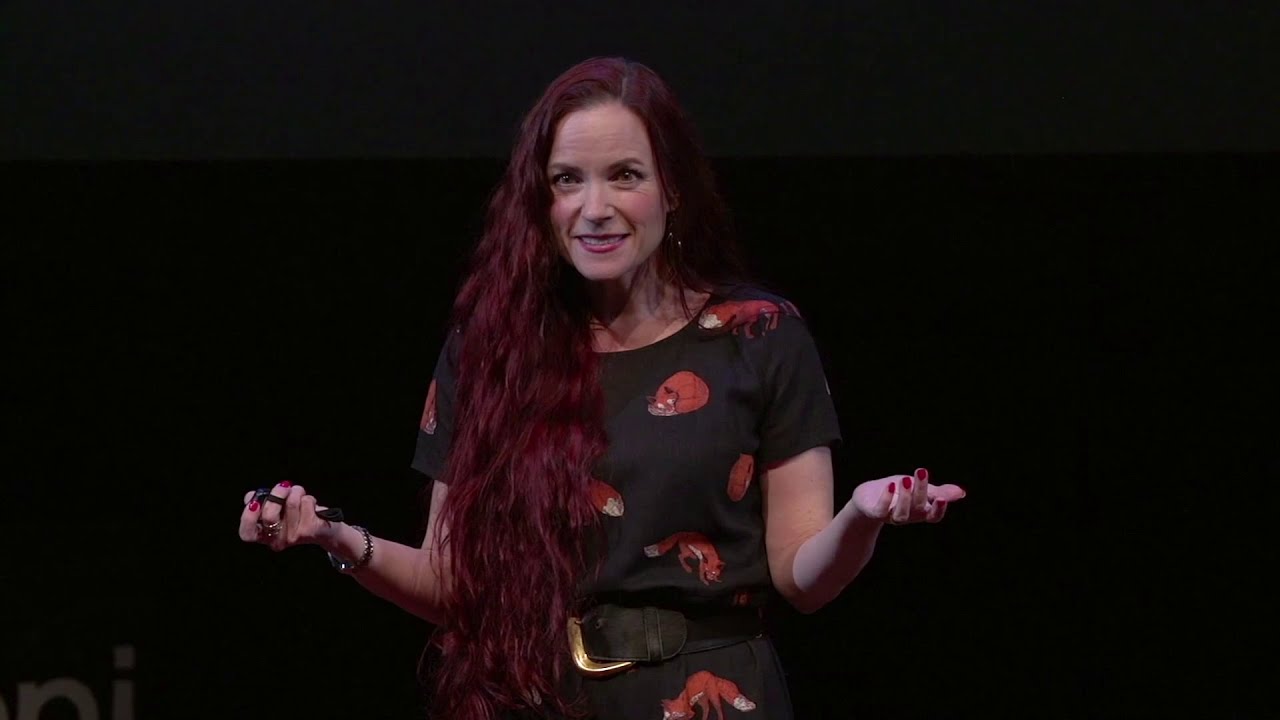
I really enjoyed listening to your insights about reading. Now that I have a sense of what happens in the brain I plan to read more deliberately and try to let my senses experience more. Thank you for this stimulating lecture.
OK, let’s talk books…
Your most recent book was The Irish Goodbye: Micro-Memoirs. Why micro-memoirs? How did you come up with the idea? What advantages do you think it holds rather than more traditionally formatted memoirs?
When you started your writing career, your first publications were poetry collections. Is there anything you can say in poetry that you can’t in prose? Do you approach writing each style differently?
YES! My husband, Tom Franklin, is also a writer–his new novel is coming out Feb. 2 and I’m so excited for him! It’s called Devilwood–Southern Gothic/noir and also beautifully constructed sentences. Tommy’s sweet spot is a blend between literary fiction (he loves Cormac Mc Carthy) and page turners (he loves Stephen King)!
My son at Univ. of MS is studying education–he wants to be a history teacher. I can’t think of a profession I’d prefer for him.
Oh, and Kim, so sorry about your mother. Lord. Welcome to this big shitty club, as someone wrote me after my mom died.
Wedding is June 12! M-o-b dress is here: Cleo Strapless Column Gown – THEIA (y’all please tell me you like it)
Thanks for sharing this! And @Lynne_G I so appreciate you watching!
That dress is AWESOME! What a great find!
I think it’s terrific that you’re so excited for your husband’s upcoming release and so supportive of his work. What’s it like having two writers in the house?
I know you collaborated on The Tilted World, a historical fiction mystery set in Mississippi. How did you decide to write a book together? Whose idea was it? Was it a relatively smooth process, or were there periods of disagreement?
In 2013 I wrote a collaborative novel with my husband, Tom Franklin. Called The Tilted World, our novel is set against the backdrop of prohibition and the flood of the Mississippi River in 1927. The novel took us four years—so eight years, combined—pretty high stakes. If it failed, things in our little house would have been bleak indeed.
Luckily, the novel didn’t fail. It found its readers. Afterwards, when considering my next project, I figured I’d write a solo novel. I tried—but instead of outlining in my notebook big novel arcs, I was jotting curious memories, or quirky thoughts, or snatches of overhead conversation. These bits of prose didn’t look like poems, essays, or stories—so I was troubled that I “wasn’t writing.”
Yet I was having fun. And as I’ve gotten older, I’ve learned to follow the fun. After the novel, it was liberating to play in a low-stakes endeavor. One morning, reading through my notebook, it occurred to me—maybe I was writing, but in a form I hadn’t recognized. These little cluster of sentences: what if they weren’t supposed to “add up to something” but instead were somethings? What if they were exactly the size they were born to be? That’s when I first thought of the word “micro-memoir,” and weirdly having a term for it gave me permission to keep doing it.
I see now that experimentation with different genres throughout my career was preparing me for creating what I’ve termed the micro-memoir. A hybrid form with multiple literary parents, the micro-memoir combines the lyrical concision of poetry, the narrative tension of fiction, and the truth-telling of creative nonfiction.
I have four goals for my micro-memoirs. First, get in and get out as fast as possible, but not faster. As David Mamet writes, “Omission is a form of creation.” Second, each should be its own narrative—small, yes, but not incomplete, not a fragment—after all, you don’t look at a hummingbird and think, Gee, if only I had one hundred of you, I’d have a crow. Third, the pieces should have physical variation, so the rhythms of a collection are varied as a piece of music. Fourth, I want the pleasure of tonal variety. Over the course of a book, a reader will experience the fullness of the emotional register.
My training was in poetry–that’s what I studied in grad school, and what I first published, and even now, writing prose, I do so leaning heavily on my poet’s training. Poetry taught me like the weight of the world teaches coal—poetry taught me extreme compression can result in diamonds. Poetry taught me to pay attention to every word, every syllable. Poetry taught me that there are no such things as synonyms—if a word sounds different, it has a different feel and therefore isn’t interchangeable. Poetry trained my ear, and even though I’ve jettisoned the line break and am crushing on the sentence and its narrative possibilities, I still read everything aloud and weigh it on my poet’s tongue.
Glad you like the dress!
The Tilted World, our co-written novel, was such a strange and serendioitous event! What happened was we’d written a collaborative short story, and after it was published, our agent, Nat Sobel, saw the story in a magazine and called Tommy. “You should expand this story for your next novel,” he said. “And you two should write it together.” I took some convincing. As a poet, I’d always joked that fiction was a “lower art,” but we decided to try it. It was fun to write together, fun to inhabit that world with him.
The novel has two point of view characters. There’s a female point of view character who’s a bootlegger. The male point of view character is a revenue agent. So you can see the natural conflict. When we began the novel, I was purely writing from the female character’s point of view, while Tommy was writing from the male character’s point of view. It was actually going pretty slowly, partly because Tommy was out on book tour for his novel, Crooked Letter, Crooked Letter. We were making some headway, but not a lot. It actually became a lot more fun and started going more smoothly when we started doing what we called dueling laptops. This is where we would be writing together in the same room, side by side, each on our own laptop. We’d start with the idea: okay we know we need this scene on the levee, and we know this person has to be arrive on the scene, and this conversation has to take place. He’d be writing the scene on his, and I’d be writing it on mine. After a while we’d stop and read our parts to each other. Sometimes we’d take all of one person’s, sometimes we’d combine some, or do something different entirely from an idea one of us had gotten from the writing. When we started doing that, the writing became more fun and surprising things were happening.
I’ve always been jealous of what musicians have when they play together on stage because writers don’t get that. You don’t get the ability to feed off of someone else on stage, or be inspired by someone else, or have that idea of a group making something together. We had that a little bit with writing this novel.
Hi Bethann I also want to tell you how much I enjoyed reading The Irish GoodBye. I read it last month. Our family recently experienced the sudden loss of a family member. The lost has caused a dysfunctional affect of blaming, guilt, resentment and distancing ourselves from each other. I hope in time we will be able to heal as did the characters in the book. I was deeply touched at the symbolic and therapeutic ending of the book.
I want to add that I had never heard or knew the meaning of an Irish Goodbye. Since my DNA is 30% Irish, it has a special significance for me.
Ahh, Lynne, I’m so sorry that we share the sadness of losing a family member. And I’m so honored you connected with the book. Thank you for reading and for telling me.
Also–30% Irish! That means you get to do an Irish goodbye 30% of the time
For those that don’t know, an Irish Goodbye is when someone slips out of a social gathering without saying a formal goodbye (I had to look it up 'cause I’d never heard the term before - what can I say, I’m Hungarian…). In your book, it’s the title of a one-sentence chapter (“How, without farewells, you slipped out the back door of the party of your life, O my sister.”). How did you decide to use this phrase as the title of your book?