Oh, gosh. I think it must have been one of houses she stayed in, maybe Bel Air. That was a long time ago! I am waiting for my library copy of your book.
1 Like
Is there a particular scene in When We Were Brilliant that you found difficult to write? How about one that was a real joy?
As you were doing your research, did you uncover anything about either woman that surprised you?
I can’t wait for you to read it! Here’s the photo Gordon Parks took of Marilyn in Bel Air. It was such a different take on Marilyn that I had to know the backstory.
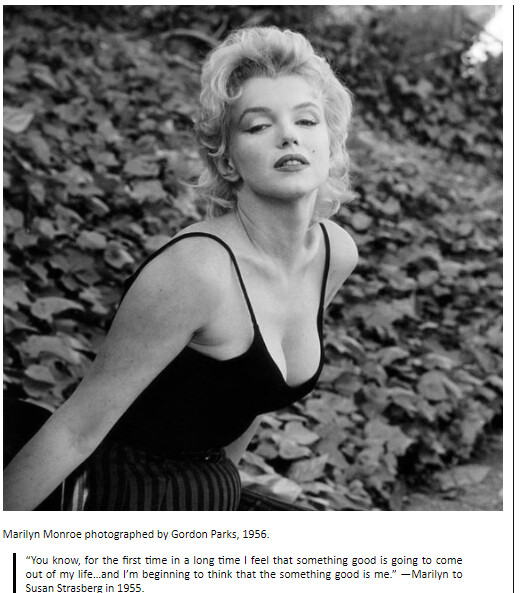
aken in Bel Air
1 Like
I was surprised to learn that Marilyn had endometriosis and how much it shaped her life. She yearned to have a baby but apparently couldn’t sustain a pregnancy beyond the first trimester; her resulting miscarriages absolutely crushed her. She was in great pain much of the time, one of the causes for the addiction to sleep meds which ended up shortening her life. It’s miraculous that she could act when in such pain.
Writing about her suffering after one of her miscarriages was difficult, especially because I had personal experience with this; one of my daughters had several miscarriages due to endometriosis. I’m tearing up now just writing this. But my own grief made me appreciate how valiant Marilyn was to be able to deliver one of her best performances ever in Some Like It Hot while teetering on the edge of another miscarriage. Writing about that was tough. Even tougher was the scene when Eve reunites with Marilyn in the hospital after Marilyn’s miscarriage while Eve was still coming to grips with her own lost pregnancy. My heart broke for them and all the women who’ve had to grieve for lost dreams for a family in silence.
My heart also broke at the end of my story but in a bittersweet way. I wrote the rest of the book just to get to that final scene, so it was a huge relief to write it.
I often say that the story is meant to be Eve’s letter of appreciation to Marilyn. Actually, it’s my letter of appreciation to Marilyn and Eve and, really, all women who endure to become brilliant.
1 Like
Thanks for sharing that. I can’t imagine how difficult those scenes had to be for you to write.
How did you feel after you decided the story was done and ready for print? Was it hard to put aside these characters and move on?
I’d like to back up and talk about your earlier career. You started out as the author of children’s books. What led you down that path, and how did you get your first book published?
And what made you decide to transition to historical fiction for adults? What challenges did you encounter in making the switch, from a writing standpoint and from a publishing standpoint?
Was it hard to put aside these characters? Yes! It’s especially hard to treat them as mere characters in my book since they are based on real women whom I got to know well. I was able to walk in Eve’s shoes to the point that her beloved grandson, Michael Arnold, the director of her estate, has told me that my Eve sounds exactly like his grandmother. He could hear her talking when he read the book. He’s asked me how I managed to capture her so accurately on the pages. The answer is, a lot of research over the span of several years with a huge helping of empathy.
1 Like
Why did I start out in children’s books? The short answer: necessity. I’d known that I wanted to write fiction as a career since I was a kid and was an English major in college to that end, but was sidetracked by having three kids in four years in my early twenties. I discovered novels for middle-grade readers as a volunteer at the school library when my oldest daughter went to kindergarten and thought, aha! I can write these! And I could…though it took me seven years to get published by a major NY firm. Through the newsletter for the Society of Children’s Bookwriters and Illustrators, I found a new editor at Houghton Mifflin who was looking for authors to fill her new list–lucky timing! I went on to publish 15 more children’s books there and at other NY publishers as my own kids grew, beginning my frequent travel to NYC, which led to a fascination with that city and its history which would later appear in many of my books. But as I raised my daughters, I yearned to write a novel that was a psychological study of an unseen or misunderstood person in history. That instinctively was always my thing. I found my first subject in the daughter of the painter Rembrandt. I wondered why he never painted her when he painted everyone else around him, from rich businessmen to beggars. He certainly painted his son! The answer is not what you think. I wrote much of my first adult book, I am Rembrandt’s Daughter, in my minivan while my kids were at soccer practice.
2 Likes
On this day in 1962, the incomparable Marilyn Monroe died. I’d like to remember her with my favorite photo of her by Eve Arnold. In it, Eve miraculously caught Marilyn’s essence: fierce, brilliant, someone whose singularity made her shine in any
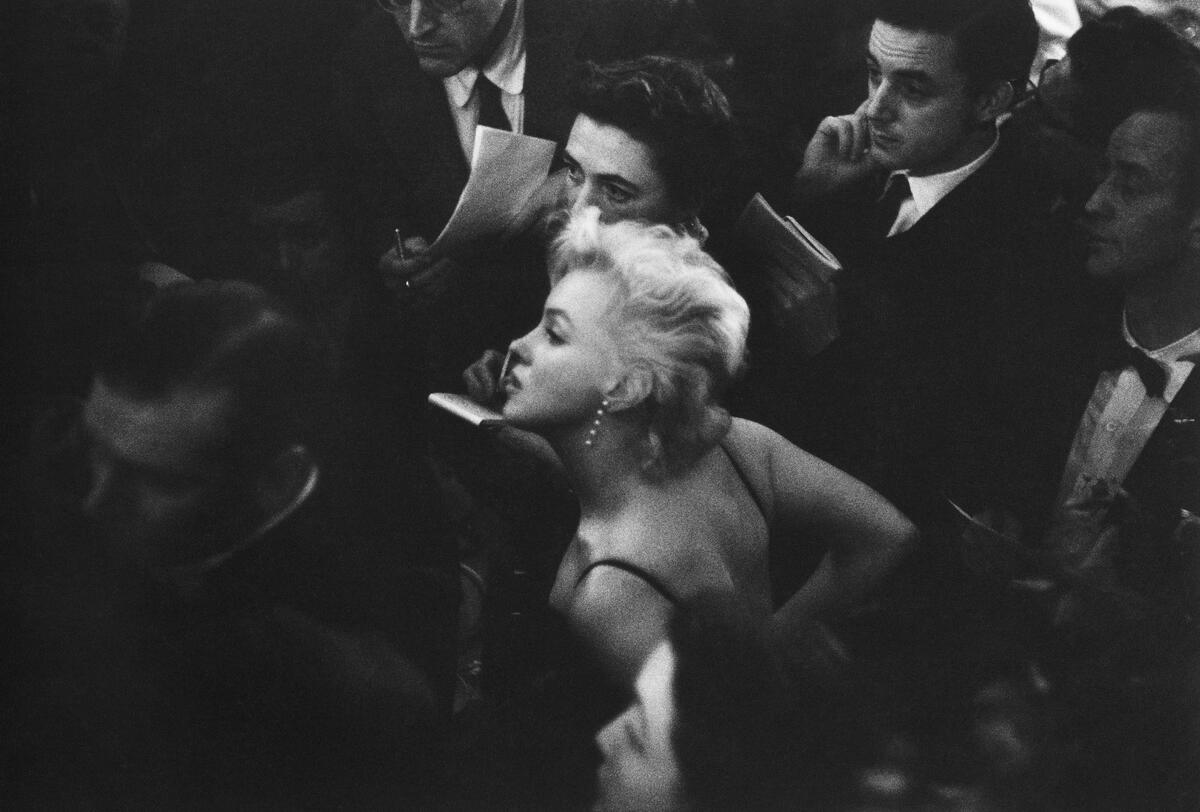
crowd. Knowing how much this image means to me (and figures in my novel), Eve’s grandson, Michael Arnold, gave me a copy of the photo. I cherish it.
2 Likes
How do you choose the subjects for your books? Do you maintain a list of possibilities?
I can tell that When We Were Brilliant is very special to you. After that one, which of your books is your favorite and why?
I admire your persistence in getting that first book published! How challenging was it to get your first adult novel accepted by a publisher? I feel like often once someone pegs you as a certain kind of writer you’re pigeonholed for life.
One of the aspects of When We Were Brilliant that I thought was fascinating was the way you dove into the world of photography. Were you a student of the subject before you started your research, or were you basically starting from scratch when you decided to include Eve’s story? Other than Eve’s photos, which photographer’s work became your favorite?
Writing When We Were Brilliant was my crash course in photography. What interested me most was the relationship between the photographer and subject. I learned that Eve Arnold had a special gift for bringing out unseen aspects even in famous people. When asked how she did it, she’d shrug and say that she let people give her what they wanted. It was up to them.
She didn’t realize how unusual her relationships to her subjects were. I asked her grandson, who knew her well, why people gave so much of themselves to her. He said he thought it was because she didn’t judge them. Her acceptance and appreciation of their individuality allowed them to show her who they really were. They wanted her to see them.
This is why Marilyn sought her out. Look at how different Marilyn appears through Eve’s camera. Would you even realize this was Marilyn Monroe if you were just skimming through photos online?
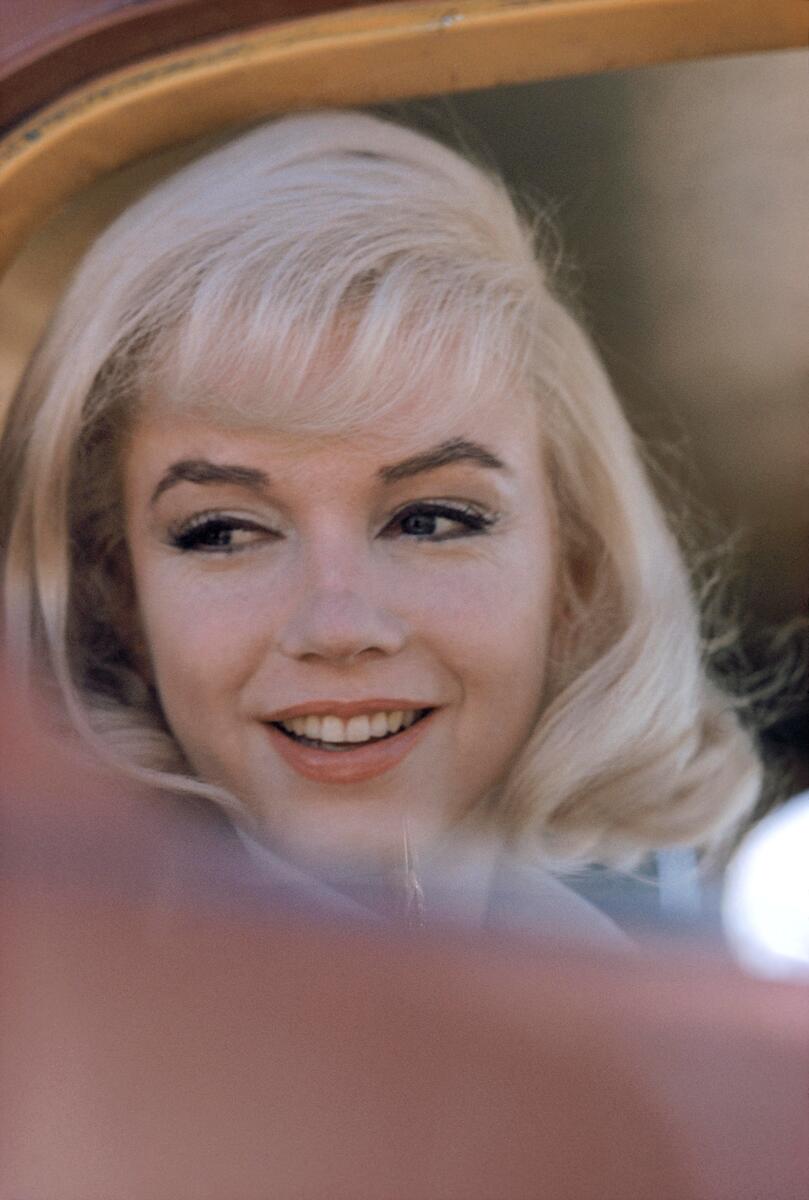
Look how young Marilyn seems here in 1959. She’s 33 years old. I believe this was Norma Jeane, putting herself out there for her trusted friend Eve to record.
1 Like
My crash course in photography included a section on the great photojournalists and portrait photographers in the age of the magazine. Eve and Marilyn were very much a part of this world. Marilyn was well aware that she would make her fame through photography. I’ve studied the greats from this era so much that I can often recognize unfamiliar pieces of their work just by knowing their style. When I give my talk at events, I like to include a quiz in which my audience learns to pick out Eve’s work from other photographers. They pick up on the differences quickly!
I love the work of many of Eve Arnold’s peers. As you can tell from my book, I’m a big fan of Gordon Parks, Milton Greene, and Henri Cartier Bresson. Check out Marilyn in Henri Cartier Bresson’s sympathetic hands. You can tell that they had a rapport.
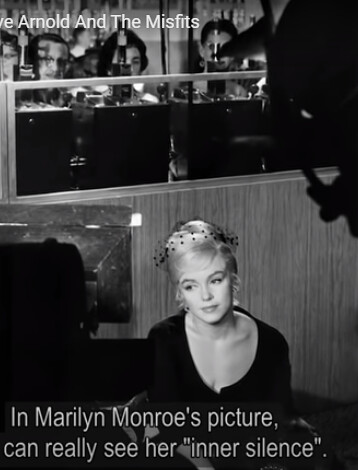
1 Like
Wow, that’s amazing! You’re right, I never would have picked up on that being Marilyn Monroe. I have to admit I didn’t know much about her before reading your book. My overwhelming feeling about her is sympathy that she had to develop this persona that really wasn’t her.
One of the things you emphasize in the book is how her voice would change, developing a breathy quality when she was in Marilyn mode. How did you learn about that?
I think it’s really cool that you got to spend so much time with Eve’s grandson. Did you interview him all in one visit, or did you make several trips to see him? What did he think when you first contacted him about featuring his grandmother in a book?
I first read that in Marilyn’s earliest film roles her voice was earthier since she hadn’t fully developed her Marilyn persona. Then I found that Eve and many others mentioned how Marilyn would put on her Marilyn act at will, and along with it, her breathy voice. And I noticed that in interviews after 1955, when she decided to embrace her desire to be a serious actress, she cut back in her breathiness as well.
Getting to know Michael Arnold was one of the unexpected highlights that came from writing this book. I’d let him know I was writing the novel early on, but didn’t show him my work until a final copy was available. I waited anxiously to hear what he thought, then pure joy: He told me how much he loved the book and how accurate he found it to be. He calls me the world’s leading authority on Eve Arnold, though I laugh and tell him, um, no, that’s him. We appeared together in London for events surrounding the Marilyn Monroe Exhibition at the National Portrait Gallery and had such a remarkable time that we’re looking for places to speak again. Some plans are in the works for this fall. I can’t wait. We share a great love and appreciation for Eve and it’s such a joy to share it with others.
Other than your London trip, have you done any other promotional events for the book? Any stories from the road you care to share?
I know you said you wrote much of Rembrandt’s Daughter while sitting in your minivan waiting for soccer practice to end. How has your writing practice evolved since then? I assume you at least have a desk now, haha. But seriously, do you write every day, or write at a specific time of day, or…?